
Group homes offer small, supportive living environments with some assistance, while Intermediate Care Facilities provide a higher level of ongoing medical and personal care between assisted living and nursing homes.
A group home refers to a residential facility designed for individuals who need assistance or supervision but can still maintain some degree of independence. Common residents include those with disabilities, people facing mental health challenges, or those transitioning from other institutions. These homes offer supportive environments staffed by professionals who help with daily activities, medication, therapy, and more. Compared to larger institutions, group homes typically have fewer residents, which allows for more privacy depending on the facility.
Qualified staff regularly assist with personal care, meal preparation, medication management, and other daily essentials.
Many facilities provide both individual and group counseling to support emotional and behavioral wellness.
Residents are taught skills for independent living, such as managing finances, organizing time, and preparing for employment.
Maintaining a secure and orderly environment is especially helpful for those leaving hospitals or other care settings.
Homes are often modified for accessibility, featuring features like accessible bathrooms, lower counters, and wide doorways.
Group homes often manage the medications of their residents. This is because individuals living in group homes often lack the capacity to safely manage their medications.
For various reasons related to intellectual or developmental disabilities, group home residents are unable to make safe day-to-day decisions. This is often the primary reason that they live in group homes. The group home is responsible for ensuring day-to-day safety of its residents.
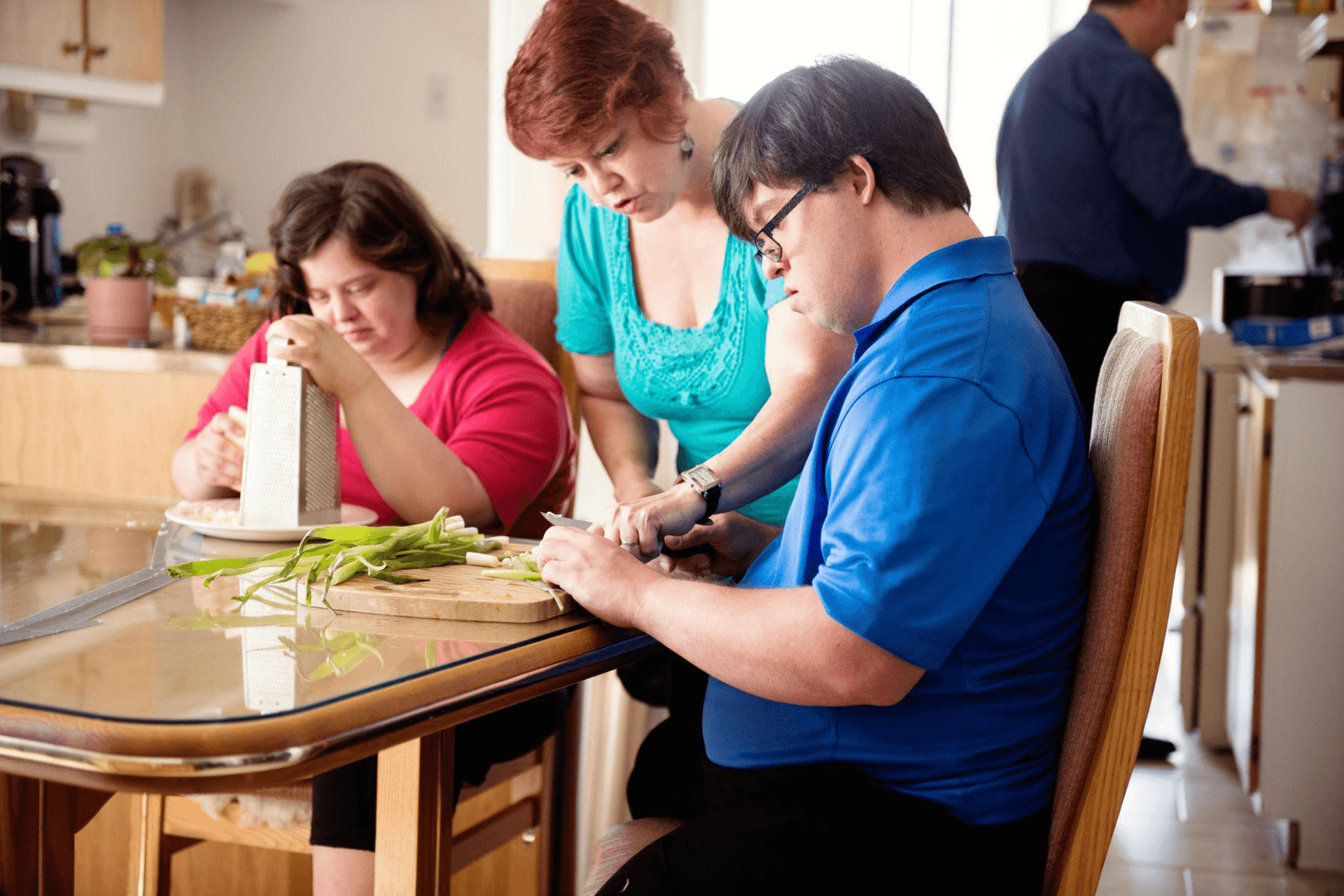
Unlike large assisted living communities, group homes operate on a smaller, locally managed scale and strive to foster a family-like atmosphere.
These homes serve individuals who do not require intensive medical care, which is provided at specialized facilities.
An ICF/IID is a distinct type of residential setting that operates as part of the federally mandated Medicaid benefit program. It is legally defined as a facility providing 24-hour comprehensive care and, most importantly, active treatment for a minimum of four individuals who have been diagnosed with an intellectual or developmental disability. The focus is on robust therapeutic intervention.
ICFs/IIDs deliver ongoing programs of specialized training, therapy, and healthcare.
The main aim is to encourage self-determination and help residents become as independent as possible.
Services include skilled nursing, physical and occupational therapy, and rehabilitation services beyond what assisted living offers.
Staff help with daily routines, managing medications, and transportation to outside appointments.
Applicants must have a developmental disability or related condition.
Candidates should require constant support that cannot be provided in less restrictive settings like waiver programs.
Income and asset limits apply, and admissions are generally limited to adults aged 18 or older.
An administrator may meet with applicants to assess their strengths, goals, and needs to ensure appropriate placement.
Group homes may be held liable for negligence if they fail to provide safe and adequate care, causing harm to a resident. To prove negligence, one must establish that the home owed a duty of care, breached that duty, and that the breach directly resulted in injury or damage.
The facility, by accepting the resident, automatically assumes a legal responsibility (duty of care) to provide competent supervision, necessary medical attention, and a physically safe environment.
The facility failed to uphold that duty. This is demonstrated by acts of omission (failing to act) or commission (improper action), such as a critical lack of supervision, failure to communicate a change in medical condition, or ignoring physician orders.
The breach must be the direct and proximate cause of the injury. There must be a clear link showing that "but for" the facility's negligence, the injury would not have occurred.
The resident suffered measurable harm, which can include physical injury, pain and suffering, wrongful death, or resulting financial costs (e.g., additional hospital bills).
Group Homes and Intermediate Care Facilities can be liability for many of the same things as Assisted Living Facilities or even nursing homes.
Neglect is unintentional conduct that deprives a person of services that they need to maintain health, achieve the highest quality of life, and meet basic needs. An example of neglect would be a failure to secure medical care for an individual who requires it or a failure to ensure that medications are given on time.
A group home or intermediate care facility can be liable for physical or sexual assault under various circumstances. These can include assaults by caregivers, other residents, or visitors.
This is often the result of group homes or facilities being understaffed or having undertrained workers.
People who live at group homes and intermediate care facilities often lack the capacity to make safe decisions. This includes decisions about when to leave the facility and where to go when they leave. Sadly, sometimes residents of group homes and intermediate care facilities go unsupervised causing them to wander away, called elopement. Elopement can deadly because residents can suffer the consequences of exposure to heat or cold, be struck by motor vehicles, or drown.
People living in group homes often cannot manage their own medications. This includes administering their medications or deciding what medications are needed at what time. Medication errors can occur when the wrong medication is given, the wrong dose of a medication is given, the medication is given to the wrong person, the medication is given by the wrong route (e.g., a whole pill is given as opposed to crushed causing choking), or too much (overdose) or too little (underdose) of a medication are given. Medication errors should never happen at group homes or intermediate care facilities.
Many people at group homes or intermediate care facilities are at risk of choking. Some of the reasons that people at group homes or intermediate care facilities are at risk of choking include, swallowing difficulties because of their disabilities or because of medication side effects, or because they have difficulty regulating the size of the bites of food they take and how quickly they chew and swallow (commonly called “scarfing” or “wolfing”).
Neglecting essential aspects like nutrition or hydration. Group home and intermediate care facility residents depend on staff to make sure that they are adequately fed and kept hydrated. Malnutrition and dehydration are dangerous in their own right, but they also weaken the immune system and make it more likely that a person will suffer an infection or have other medical complications.
Group homes and intermediate care facilities can be liable for infections that their residents get. This can include the infection itself if the group home or intermediate care facility has failed to maintain a clean, hygienic environment or for failing to obtain medical care when a person has signs of an infection.
Group homes and intermediate care facilities can be liable for falls that cause injuries. To be liable for a fall, the group home or intermediate care facility must have known or had reason to know that a person was at risk of falling and failed to take appropriate precautions to prevent falls.
The following cases are examples of those that we are handling that underscore the severe, often deadly, outcomes that can result when Group Homes and ICF/IIDs fail to meet their duty of care:
| Incident Type | Case Summary and Legal Implication |
|---|---|
| Fatal Bowel Obstruction | A 41-year-old autistic resident, whose regimen included medications known to cause severe constipation, died from a catastrophic bowel impaction. The facility staff were found negligent for failing to follow the resident's bowel management protocol, missing weeks of documentation, and ignoring clear signs of distress and lack of output. Implication: Neglect (Failure to monitor and respond to chronic medical needs). |
| Accidental Medication Overdose | A 44-year-old resident with an intellectual disability suffered a fatal accidental overdose of powerful psychiatric medications. The liability centered on the group home staff, who were responsible for managing and administering the complex medication dosage schedule, for making a critical administration error. Implication: Medication Errors and Inadequate Training. |
| Severe Abuse and Physical Assault | A young woman in an intermediate care facility endured multiple instances of profound neglect, including being left on a dangerously hot transport bus unattended. Most critically, she required emergency medical attention after her throat was inexplicably slit while she was under the sole supervision of a facility caregiver. Implication: Failure to Supervise, Abuse, and Staff Misconduct Liability. |
| Overfeeding Leading to Pneumonia | A 30-year-old non-verbal woman with cerebral palsy, dependent on a feeding tube, died from aspiration pneumonia and subsequent sepsis. The negligence occurred when a distracted nurse administered two to three times the prescribed amount of liquid feed, which backed up into the resident’s lungs. Implication: Medication/Tube Feeding Error and Lack of Focus. |
| Wrongful Death from Repeated Falls | A 60-year-old man with Down’s Syndrome died from a brain bleed (subdural hematoma) following a final, catastrophic fall. The facility was found negligent because this fall followed a documented history of numerous previous falls, demonstrating a persistent and systemic failure to assess, document, and implement effective fall prevention measures for a known high-risk resident. Implication: Falls and Systemic Neglect (Failure to update the care plan). |
| Choking Fatality | A resident with Down's Syndrome, who was medically assessed and known to be at an exceptionally high risk of choking due to rapid eating habits (dysphagia), died after choking on food. The group home staff failed to ensure he was supervised during meals as mandated by his care plan or failed to modify his meal texture and bite size. Implication: Choking and Failure to Follow Dietary/Supervision Protocols. |
If a resident or their representative believes that negligence, abuse, or substandard care has occurred at a Group Home or ICF/IID, immediate action is necessary to protect the resident and preserve a potential legal claim:
Collect and secure all available records, including the resident's current care plan, facility incident reports, medical records from subsequent hospitalizations, photographs of any injuries (e.g., bed sores, bruises), and detailed chronological notes of the events and staff actions.
Seek prompt advice from an attorney who specializes in personal injury, elder law, or disability rights cases. They can assess the merits of the claim, quantify potential damages, and guide the investigative process.
File formal complaints with the state agencies responsible for the licensing, regulation, and oversight of these facilities (e.g., State Department of Health, Department of Developmental Disabilities). These agencies conduct independent investigations that can be crucial for supporting a civil claim.